



















Check out our new feed charts - | Basic Feed Chart | Advanced Feed Chart |

Popular Products

More Products

Mycorrhizae and Root Development

Some common products out there for root development and Mycorrhizae. There are a few key factors to determine the quality and effectiveness of your Mycorrhizae product. Watching for these slight signs will make all the difference in your root system over the life of your plant. Get some in-active, old or otherwise worthless Mycorrhizae and your grow will suffer. Kelp4less wouldn’t do that to you, no need for your grow to suffer. Follow these steps to ensure success.

Know the Difference

Bacteria. Bacteria are vital for recycling nutrients. Bacteria can be recognized by their shape and motion. Bacteria are mostly round or rod shape. Some filamentous bacteria are required for the growth of some plants while they are quite detrimental to the growth of other plants.

Fungi. A fungal hyphae can be distinguished by its strand-like appearance with straight cross walls. A hyphae should be uniform in diameter, and not less than 2 micrometers thick. The best hyphae in our soil are those that are wide in diameter and dark in color. (Generally, when speaking of soil health, dark is always good.) These wonderful networks of the soil food web help to hold and transfer nutrients directly to plants through symbiotic relationships. They also promote healthy soil aggregation.

Don’t Buy Water

  1. Any Mycorrhizae or Trichoderma product containing water is a stabilize liquid. This is required so the container doesn’t go anaerobic or explode on a retail store’s shelf.
  2. This stabilization process seizes all the micro-biology growth, which defeats the entire purpose of feeding Mycorrhizae.

Examples of watered down products:

Voodoo Juice – Advanced Nutrients

voodoo_juice_derivitivesvoodoo_juice

Did you see that bottom line on the back label of Voodoo Juice? 98% Water? I didn’t know water was so expensive? Can’t you get a gallon of this “water” at any local convenience store for less than $3? Where is this other price coming from? Ohh yeah – product labeling, fancy graphics, and the sales and marketing team they design to hide this obvious fact that they are selling you water. But not only water, a stabilized, therefor “dead”, mycorrhizae product which is 98% water and 2% actual product.

Moving on to powders

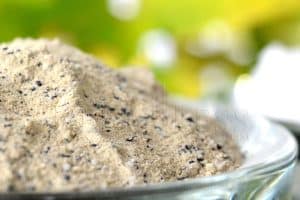
Many products on the market are powder or granular Mycorrhizae products. Understand most (maybe 98%) of all mycorrhizae products come from the same source. Nothing is special between one brand and another. There are a few things to watch for to get the right stuff.

  1. Freshness – this is key. An old batch is not as potent as a new batch
  2. This product only stores for 12 months. After this time, you loose most microbial value.
  3. There are 4 main strains to watch for…Rhizopagon (ECTO), Glomus (ENDO), Trichoderma and Bacillus (bacteria). Some may mix and match but understand it’s all the same strains being used repeatedly. Maybe some have more or less bacillus sub-strains but you still ultimately have the Bacillus, Glomus or Trichoderma. There are many, many other strains of fungi and bacteria, but the plant and plant nutrients industry really only works with these 3 main strains.

Don’t Buy Blends

Products you have probably seen or used:

ZHO Root Inoculant – Bontanicare

Zho Bag

ZHO Root Inoculant  contains 49% inert ingredients. Meaning 1/2 of what you are buying is useless, of no value, waste of money. Do not buy blended products.

Great White – Plant Success

Great White

Great White is a superb product. Works great, just is not cost effective. Not blended with anything that is not needed (which is good). Just the Bacteria and Fungi Strains. Want a cheaper solution? Our Myco + Trichoderma blend is a perfect substitute that will also save you some money.

This educational post is for that intent only. Education. Don’t be afraid to read the back of the label of all the products you use now and do some research.

How to Brew Compost Tea

Many have heard of the benefits of Compost Tea. You know it works, but why and how? We want to shed some light on this subject. Explaining a few key elements to brewing a good Compost Tea.

The largest factor in the quality of your Compost Tea is of course, your Compost. Where did it come from? How was processed? Great Compost should smell sweet, earthly and rich. Compost is a great tool if used properly. Although it’s pretty hard to mess it up. Compost is full of nutrients, vitamins and minerals and when mixed with aerated water, active biology.

Compost Tea Starter

Compost Tea Starter

This Compost Tea Starter has added Mycorrhizae, Kelp, Humic Acids, Amino Acids and Fulvic Acids. A great combination of organic acids and beneficial bacteria.  The concept is to soak the compost is water. For best results, you should provide aeration. Allowing the microorganisms to thrive and grow. Creating the environment for this bacteria to develop will make for easy processing of the “locked-up” nutrients.

Nutrients are there in your soil, the plant simply can’t gain access them. The  microorganisms  in the Compost Tea will break down all the nutrients and allow the plant to now gain access.

Water Prep

When preparing your water, if you are using tap water, let is sit in the sun for 24-36 hours. This will help de-chlorinate the water. A 5 Gallon bucket of water Adding aeration to this water will drop your wait time from 24-36 hours to 12-18 hours. I let my water bubble away empty for 1-2 days before using it. Continually cycling air into the water will help establish a proper environment for the micro-biology to grow.

Super Soaker

Grab a small burlap sack, sand bag, old sock and my personal favorite, panty hose. Fill up the sack with your Compost or our Compost Tea Starter. If you have earth worm castings they are another great addition to this micro biology we are trying to create. When your sack is full, find a way to seal it. Tie it together, or seal it in any way of your liking.

Toss in the Compost “sock?”. You can suspend the Compost to allow for better aeration, which in turn creates that ideal environment for these microorganisms to flourish.

Good Things Take Time

Average brew time can vary based on personal preference, but we like to brew for a minimum of 24 hours. Take 48-72 hours and you will see and taste the difference in your fruit or flowers. Foaming is normal, especially if you are adding some Kelp4less nutrients. Let this brew bubble away and next we will talk about application rates.

Compost-Tea

Time to Apply

Compost makes a great product to feed your plants as it is so flexible in it’s application. You are able to root drench you plants, foliar spray to leaves (just make sure filter or screen the solution before spraying), dilute it down with water and feed many, many plants in your garden or flower bed. 5 Gallons of this Compost Tea can be diluted to make 25 Gallons of ready to use feeding water.

Feed this brew once a week and water with regular water in between feedings. This is great for Flowers, Vegetable Plants, Trees, Shrubs and even back into your Compost Pile to complete the natural cycle.

Advanced Tips and Tricks

Here are a few tips and tricks that will make all the difference in your Compost Tea Brews.

  • Start with Warm Water – This makes a huge difference in the end result(active biology). Do you think the small microorganisms want to live in cold water?
  • Inoculate your Compost Tea with Mycorrhizae to stimulate micro-biological growth. A.K.A – growing your nutrient break down army.
  • Don’t add Molasses until the end of the brew. Only allow your Molasses to brew for 30 min – 1 hour. You can promote bad pathogens due to the high sugar content of Molasses. if you are not careful.
  • Do not waste this. All the sludge on the side of your bucket, or bottle, all the remaining sludge left over, this still makes great fertilizer. Just Add Water and apply it again.